
Free delivery options available!

Aluminium Composite Panels (ACP Sheets & Boards)

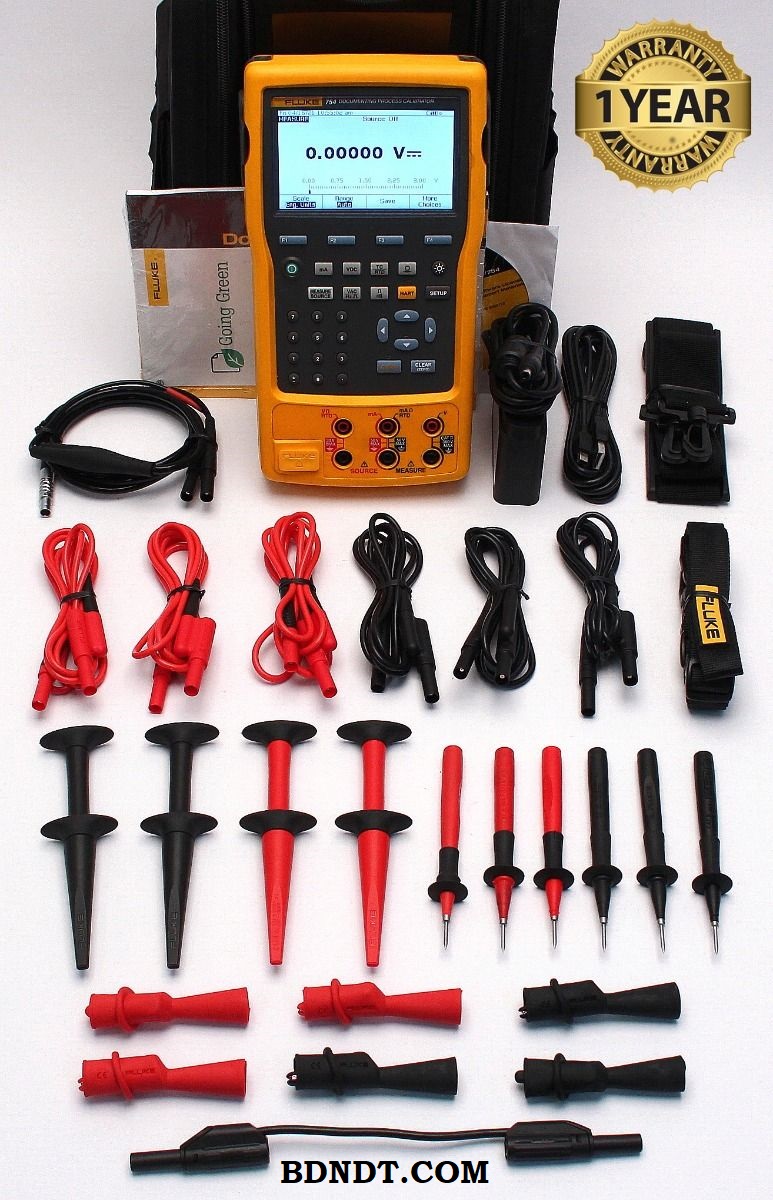
Fluke 754 Documenting Process Calibrator HART Price in BD

$ 94.99

New!
Features: Measure volts, mA, RTDs, thermocouples, frequency, and ohms to test sensors, transmitters and other instruments Source/simulate volts, mA, thermocouples, RTDs, frequency, ohms, and pressure to calibrate transmitters Power transmitters during test using loop supply with simultaneous mA measurement Measure/source pressure using any of 29 Fluke 700Pxx Pressure Modules Create and run automated as-found/as-left procedures to satisfy quality programs or regulations. Record and document results Holds up to a full week of downloaded procedures and calibration results. Use many features like autostep, custom units, user entered values during test, one-point and two-point switch testing, square root DP flow testing, programmable measurement delay etc. Easy to use Three year warranty Bright white dual display. Read both sourced and measured parameters simultaneously. Multi lingual interface Rechargeable Li-Ion battery for 10 hour uninterrupted use. Includes gas gauge. Handling of fast pulsed RTD transmitters and PLCs, with pulses as short as 1 ms. Delivered with DPC/Track Sample software. Compatible with many Asset Management software packages. Specifications: Measurement Accuracy Voltage DC      1 Year             2 Years 100.000 mV    0.02% 0.005 mV     0.03% 0.005 mV 3.00000 V     0.02% 0.00005 V     0.03% 0.00005 V 30.0000 V     0.02% 0.0005 V     0.03% 0.0005 V 300.00 V     0.05% 0.05 V     0.07% 0.05 V Voltage AC  Range 40 to 500Hz  Resolution     1 Year             2 Years 3.000 V     0.001 V     0.5% 0.002 V     1.0% 0.004 V 30.00 V     0.01 V     0.5% 0.02 V     1.0% 0.04 V 300.0 V     0.1 V     0.5% 0.2 V     1.0% 0.2 V Current DC                                 1 Year          2 Years 30.000 mA       0.01% 5 uA      0.015% 7 uA 110.00 mA     0.01% 20 uA     0.015% 30 uA Resistance                            1 Year                 2 Years 10.000 O     0.05% 50 mO     0.07% 70 mO 100.00 O     0.05% 50 mO     0.07% 70 mO 1.0000 kO      0.05% 500 mO     0.07% 0.5 O 10.000 kO     0.1% 10 O     0.15% 15 O Frequency      Resolution     Accuracy (2 Years) 1.00 to 110.00 Hz     0.01 Hz     0.05 Hz 110.1 to 1100.0 Hz     0.1 Hz     0.5 Hz 1.101 to 11.000 kHz      0.001 kHz     0.005 kHz 11.01 to 50.00 kHz     0.01 kHz     0.05 kHz Source Accuracy Voltage DC                                         1 Year     2 Years 100.000 mV   0.01% 0.005 mV     0.015% 0.005 mV 1.00000 V     0.01% 0.00005 V     0.015% 0.0005 V 15.0000 V     0.01% 0.0005 V     0.015% 0.0005 V Current DC                                                       1 Year    2 Years 22.000 mA (Source)     0.01% 0.003 mA     0.02% 0.003 mA Current Sink (Simulate) 0.02% 0.007 mA     0.04% 0.007 mA Resistance                                       1 Year     2 Years 10.000 O       0.01% 10 mO     0.015% 15 mO 100.00 O       0.01% 20 mO     0.015% 30 mO 1.0000 kO     0.02% 0.2 O     0.03% 0.3 O 10.000 kO     0.02% 3 O     0.03% 5 O Frequency      2 Years 0.1 to 10.99 Hz     0.01 Hz 0.01 to 10.99 Hz     0.01 Hz 11.00 to 109.99 Hz     0.1 Hz 110.0 to 1099.9 Hz     0.1 Hz 1.100 to 21.999 kHz     0.002 kHz 22.000 to 50.000 kHz     0.005 kHz Technical Data Data Log Functions Measure functions:     Voltage, current, resistance, frequency, temperature, pressure Reading rate:     1, 2, 5, 10, 20, 30, or 60 readings/minute Maximum record length:     8000 readings (7980 for 30 or 60 readings/minute) Ramp Functions Source functions:     Voltage, current, resistance, frequency, temperature Rate:     4 steps/second Trip detect:     Continuity or voltage (continuity detection not available when sourcing current) Loop Power Function Voltage:     Selectable, 26 V Accuracy:     10%, 18 V minimum at 22 mA Maximum current:     25 mA, short circuit protected Maximum input voltage:     50 V DC Step Functions Source Functions     Voltage, current, resistance, frequency, temperature Manual Step     Selectable step, change with arrow buttons Autostep     Fully programmable for function, start delay, stepvalue, time per step, repeat   Environmental Specifications Operating Temperature  -10 °C to 50 °C Storage Temperature -20 °C to 60 °C Dust/water resistance Meets IP52, IEC 529 Operating Altitude 3000 m above mean sea level (9842 ft)   Mechanical & General Specifications Size 136 x 245 x 63 mm (5.4モ x 9.6 x 2.5) Weight 1.2 kg (2.7 lb) Batteries Internal Battery Pack Li-ion:     7.2V, 4400mAh, 30 Wh Battery Life  >8 hours typical Battery Replacement Replace without opening calibrator; no tools required Side port connections  Pressure module connector USB Connector to interface to your PC Digital instrument (HART) connector Connection for optional battery charger/eliminator Data storage capacity 1 week of calibration procedures results   Temperature, Resistance Temperature Detectors Degrees or % of reading Type (a) Range °C Measure °C1 Source current Source °C Allowable current 1 year 2 year 1 year 2 year 100 O Pt (385) -200 to 100 100 to 800 0.07 °C 0.02 % 0.05 °C 0.14 °C 0.04 % 0.10 °C 1 mA 0.05 °C 0.0125 % 0.04 °C 0.10 °C 0.025 % 0.08 °C 0.1 mA to 10 mA 200 O Pt (385) -200 to 100 100 to 630 0.07 °C 0.02 % 0.05 °C 0.14 °C 0.04 % 0.10 °C 500 µA 0.06 °C 0.017 % 0.05 °C 0.12 °C 0.034 % 0.10 °C 0.1 mA to 1 mA 500 O Pt (385) -200 to 100 100 to 630 0.07 °C 0.02 % 0.05 °C 0.14 °C 0.04 % 0.10 °C 250 µA 0.06 °C 0.017% 0.05 °C 0.12 °C 0.034 % 0.10 °C 0.1 mA to 1 mA 1000 O Pt (385) -200 to 100 100 to 630 0.07 °C 0.02 % 0.05 °C 0.14 °C 0.04% 0.10 °C 150 µA 0.06 C 0.017 % 0.05 °C 0.12 C 0.034 % 0.10 °C 0.1 mA to 1 mA 100 O Pt (3916) -200 to 100 100 to 630 0.07 °C 0.02 % 0.05 °C 0.14 °C 0.04 % 0.10 °C 1 mA 0.05 °C 0.0125 % 0.04 °C 0.10 °C 0.025 % 0.08 °C 0.1 mA to 10 mA 100 O Pt (3926) -200 to 100 100 to 630 0.08 °C 0.02 % 0.06 °C 0.16 °C 0.04 % 0.12 °C 1 mA 0.05 °C 0.0125 % 0.04 °C 0.10 °C 0.025 % 0.08 °C 0.1 mA to 10 mA 10 O Cu (427) -100 to 260 0.2 °C 0.4 °C 3 mA 0.2 °C 0.4 °C 0.1 mA to 10 mA 120 O Ni (672) -80 to 260 0.1 °C 0.2 °C 1 mA 0.04 °C 0.08 °C 0.1 mA to 10 mA
Category:

Aluminium composite panels (ACP) are lightweight, rigid sheets made from two aluminium layers bonded to a polyethylene or mineral-filled core. Also known as aluminium composite board or aluminium composite material, these panels are widely used for signage, displays, cladding, and architectural applications due to their strength, durability, and smooth surface finish.

diamondcutrugs supplies high-quality aluminium composite panels in multiple sizes, thicknesses, and finishes. Easy to cut, route, and fabricate, ACP sheets are ideal for professional sign makers and commercial projects requiring a long-lasting and visually clean material.

Aluminium Composite Panels: Premium ACM Solutions for Australian Projects

If you’ve been in the construction industry for a while, you have likely hit that wall where a client wants something that photographs well, does not cost a lot, and will not warp in Australia after a summer or two.

Sheet aluminium costs a fortune and bends with heat. Acrylic is prone to scratching. Dibond works, but the colour range can be quite limiting.

This is where aluminium composite panels or aluminium composite boards really shine.

  • The material stays flat without fussing.
  • They cut clean on a CNC or guillotine.
  • They survive Melbourne weather without turning into a warped mess.

.. which is more than you can say for half the materials out there.

But not every ACP is built the same. If you spec the wrong one, you’re looking at failed building inspections, panels that fade within 18 months, or worse, having to redo the entire job.

diamondcutrugs is a family-owned business, backed by more than 50 years of experience in the industry. If you’re planning your next signage or construction project and want panels you don’t have to second-guess, we have got you covered.

What Is Aluminium Composite Material?

ACM is essentially a three-layer sandwich that’s been heat-bonded under pressure. Two aluminium skins on the outside (usually 0.21mm on each side) with a core material locked in between. That core is made with polyethylene if it’s a standard panel.

The aluminium skins do the heavy lifting structurally.

They let you route, drill, fold, even bend the panel without it cracking.

The core keeps everything rigid while dropping the weight to about a third of what solid aluminium would be.

This really matters when you’re hauling sheets up scaffolding or trying to fit eight panels in a ute without the suspension bottoming out.

What sets ACP sheets apart from just gluing materials together is how it’s manufactured.

The bonding happens under heat and pressure, so you’re not dealing with adhesive failure down the track. This reliability is why it is one of the most sought-after materials today. You will see it in the following use cases:

  • External building cladding and architectural facades
  • Monument signs, pylons, the big stuff you see from the road
  • Shopfronts and retail fascias
  • Feature walls and internal partitions
  • Large format print substrates, when you need something flat and stable

Surface finish varies depending on what’s been ordered. It could be polyester powder coat, PVDF, brushed, or even mirror finish aluminium.

Core type affects fire compliance and weight. Skin thickness affects how cleanly it machines. All of it matters depending on what you’re building.

As one of the more established aluminium composite panel suppliers Australia trusts, diamondcutrugs focuses on:

  • consistent, high-quality ACP sheets
  • reliable stock availability
  • fast delivery across Victoria and nationwide
  • and custom cut aluminium panels

Instead of trimming sheets onsite or wasting half a day resizing material, panels arrive for you, ready to install.

Types of Aluminium Composite Panels

Different jobs need different specs. Using the right type makes a big difference. This is where people commonly make mistakes.

With the wrong type of ACM, a job could get knocked back because of choosing the wrong type. You need to match the panel type to what you’re building:

Polyethylene Core Panels (PE)

This is what most sign shops keep stacked in the corner because it handles the bulk of everyday work.

Polyethylene core keeps the weight down, seamless on machines, and comes in enough stock colours that you can find something close to what you want.

Where PE is used the most:
  • Shopfront signage panels and retail fascias
  • Monument signs sitting at ground level
  • Internal wayfinding and directional signage
  • Temporary structures, hoarding, event installations

This is cheaper than FR, easier to work with, and available basically everywhere. The trade-off is fire performance. You can’t put it on a high-rise and can’t use it where codes require non-combustible materials. But it gets the job done for most.

Coloured and Specialty Finishes

Beyond your whites, silvers, blacks, there are brushed looks, mirror finishes, metallics, if you have the specific Pantone or RAL requirements.

Some finishes are shelf stock, others you are ordering in and waiting a couple of weeks for.

  • Brushed hides scratches way better than gloss (good for high-traffic spots)
  • Mirror looks polished
  • Matte finishes photograph cleanly. This is suitable for corporate work.

Speak with one of Australia’s trusted aluminium composite panel suppliers today.

Request a quote, or place your order with diamondcutrugs.