
Free delivery options available!

Aluminium Composite Panels (ACP Sheets & Boards)

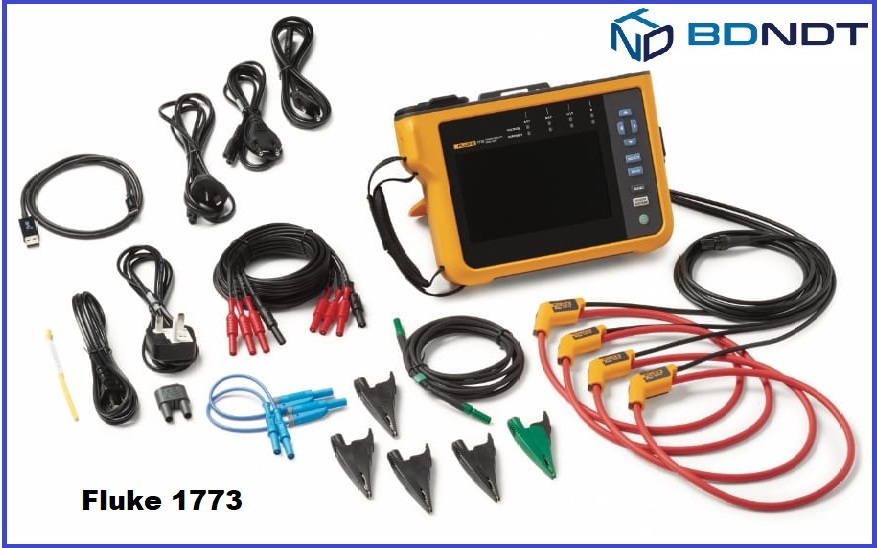
Fluke 1773 Three-Phase Power Quality Analyzer in BD

$ 95.77

New!
Features Automatically measure power and power quality parameters Power system connection and instrument setup autocorrection Instrument automatically detects error in voltage and current wiring, providing correction without rewiring High resolution touchscreen Capacitive touchscreen allows use with PPE (double gloved hands), providing clear results in seconds Power quality health summary: automatically evaluate power quality inputs against the EN 50160 electrical standard, providing detailed troubleshooting of power quality problem areas Harmonics: multiple methods of harmonic analysis provide users with the data they increasingly need with basic fundamental to 50 integer harmonics, 2 to 9 kHz for IEC61000-4-30 Annex A compliance and harmonics to 30 kHz harmonics to discover the effects of inverters on the network Critical power quality data is captured as soon as you begin a session, without extensive setup or selections Intuitive user interface makes it easy to navigate between measurement parameters like V/A/Hz, power, dips and swells, harmonics, or PQ health at the push of a button Capture damaging high-speed transients so you can mitigate their effects before equipment fails Analysis and reporting comes standard with Fluke Energy Analyze Plus software giving you the ability to create customized reports, or leverage built-in one-click reporting to industry standards like EN 50160, IEEE 519 and GOST 33073 Applications Basic power studies Basic power quality studies Energy surveys Load studies Capture events Harmonic surveys Automatic measurements. More flexibility. Better power quality troubleshooting The three-phase power quality analyzers eliminate the complexities of power quality logging, troubleshooting, and analysis. Engineered to be the faster, easier way to perform power quality studies, the 1770 Series offers automatic measurements, a straightforward user interface and setup, best-in-class specifications, and a simplified reporting platform. The instrument can also be powered directly from the measurement circuit, eliminating the need to find a power outlet or use a lengthy extension cord. With the 1770 Series you’ll never miss a critical power quality event—from fast transients up to 8 kV, harmonics up to 30 kHz, dips and swells, as well as the voltage, current, and power measurements that enable you to characterize your electrical system. Automatic measurement capture Whether you’re performing a quick system check or a detailed power quality study, consistent data is key. The power quality analyzer offers a unique automatic measurement capture system that helps ensure you’re collecting the right data every time, while still giving you the flexibility to select and adjust specific parameters as needed. More than 500 power quality parameters are captured by default and the guided setup makes it easy to select the right parameters for the system you’re working on. Logged data is instantly viewable, downloadable, and shareable with Fluke Energy Analyze Plus software so you never need to wait to finish a session before reviewing results or analyzing data. Ultimate measurement confidence The three-phase power quality analyzers are 2-in-1 devices that combine the troubleshooting functionality of a power quality meter with the robust analysis and logging capabilities of a standalone power quality analyzer—in a single, easy-to-use, handheld device. The ‘PQ Meter’ function gives you immediate access to live onscreen data in the field so you can quickly identify potential problems while troubleshooting. The detailed ‘PQ Logging and Analysis’ function eliminates the complexity of performing power quality studies by guiding you through the setup process ensuring you’re capturing the right data every time. Couple these measurement modes with a unique measurement connection autocorrect function and you can be confident that you never need to worry about going back for a second measurement—even if you were unsure about what to look for when you started. High-speed voltage transient capture Transients negatively impact otherwise healthy systems every day and their potential to damage your equipment can’t be underestimated. Whether your system is experiencing impulsive or oscillatory transients, the results can be devastating and cause problems ranging from insulation failures to total equipment failures. The 1775 and 1777 incorporate advanced transient capture technology to help you clearly identify high-speed voltage transients, so you have the data you need to stop them in their tracks. The 1775 Power Quality Analyzer has 1MHz sampling capability to capture fast transients, while the 1777 Power Quality Analyzer has 20 MHz sampling capability to capture the fastest transients in high detail. From traditional industrial systems to renewable energy systems to electric vehicles, we’ve got you covered The three-phase power quality analyzer was designed to be safe and easy to use in any measurement environment. The three-phase power quality analyzer allows you to capture a full range of power quality variables as well as high-speed waveforms, high-speed transients, and higher frequency harmonics, all of which are instantly viewable on the large, high-resolution screen. With a best-in-class CAT IV 600 V / CAT III 1000 V overvoltage rating, these analyzers can be used at the service entrance or downstream, measuring AC and DC inputs, and harmonics measuring up to 30 kHz. With the 1770 Series you can be confident that you’ll capture the data you need to make better maintenance decisions no matter the task. Work where, when, and how you want No two days in the field are the same. You need a power quality analyzer that can go where you go and do what you need it to when you get there. With a full range of accessories and built-in features the 1770 Series makes it easier to get your job done. The slim ergonomic design and integrated hand strap make it easy to hold and the included hanging kit makes it easy to secure your analyzer inside a cabinet. The integrated internal power supply allows the unit to be powered directly from the measured circuit, while a 90-minute battery helps ensure you can still access and review data even when you aren’t connected to a live system. Quickly and easily transfer data to your PC using the USB C, USB A, Ethernet, WiFi, cellular network support options, depending on your requirements. With an internal GPS module and an optional double insulated external antenna, you can time sync your data for more accurate troubleshooting and analysis.  Calculate current harmonics limits When downloading data from the 1770 Series Power Quality Analyzers the included Energy Analyze Plus software package can compare measured voltage and current harmonic statistical data to different standards, like EN 50160 or IEEE 519, to determine if they exceed compliance limits. This powerful predictive maintenance feature enables current harmonics to be observed before distortion appears in the voltage allowing you to prevent unexpected failures or non-compliance situations and increase system uptime. With the proliferation of inverter-based loads and power generation, keeping current harmonics in check is becoming increasingly critical to ensure reliable power quality and avoid system downtime. Voltage Inputs Number of Inputs 4 inputs, 3 phases and neutral referenced to PE (5 connectors) Measurement Category 1000 V CAT III/600 V CAT IV Maximum Input Voltage 1000 V rms/1000 V DC (1700 Vpk) Nominal Voltage Range Wye and single phase: variable (50 to 1000 V) Delta: variable (100 to 1000 V) IEC 61000-4-30 Class A compliance for the nominal voltages (Vdin) 100 to 690 V Input Impedance 10 MΩ between P-P and P-N, 5 MΩ between P-PE and N-PE Bandwidth DC to 30 kHz for PQ measurements, excluding transients Resolution 24-bit synchronous sampling Sampling Frequency 80 kS/second at 50/60 Hz Scaling 1:1, variable for use of potential transformers Voltage Transients Measurement Range ±8 kV Bandwidth DC to 1 MHz Trigger Adjustable trigger level Triggers on high-frequency components >1.5 kHz Resolution 14-bit synchronous sampling Current Inputs Current Inputs 4 inputs 3 phases and neutral, range selected automatically to attached sensor Bandwidth DC to 30 kHz Resolution 24-bit synchronous sampling Sampling Frequency 80 kS/second at 50/60 Hz Scaling 1:1 variable Input Voltage Clamp: 50 mV/500 mV rms; CF 2.8 Rogowski coil: 15 mV/150 mV rms at 50 Hz, 18 mV/180 mV rms at 60 Hz; CF 4 All at nominal probe range Input Impedance 11 kΩ Data Acquisition Voltage and Current Input Mains Frequency DC, 50/60 Hz ±15% (42.5 to 57.5 Hz, 51 to 69 Hz) Topologies 1-φ, 1-φ IT, split phase, 3-φ delta, 3-φ wye IT, 3-φ aron/blondel (2 element delta), 3-φ delta open leg, 3-φ high leg delta Data Storage 8 GB internal Memory Size Typical 10 logging sessions of 8 weeks with 1-minute intervals and 100 events The number of possible logging sessions and logging period depends on user requirements Real-time Accuracy Internal: 3 ppm (0.26 seconds per day, 8 seconds per month) NTP (internet time): depending on internet latency, typical <0.1 seconds absolute to UTC GPS: <1 ms absolute to UTC General Dimensions 11.0 x 7.5 x 2.4″ (28 x 19 x 6.2 cm) Weight 4.6 lbs (2.1 kg)
Category:

Aluminium composite panels (ACP) are lightweight, rigid sheets made from two aluminium layers bonded to a polyethylene or mineral-filled core. Also known as aluminium composite board or aluminium composite material, these panels are widely used for signage, displays, cladding, and architectural applications due to their strength, durability, and smooth surface finish.

diamondcutrugs supplies high-quality aluminium composite panels in multiple sizes, thicknesses, and finishes. Easy to cut, route, and fabricate, ACP sheets are ideal for professional sign makers and commercial projects requiring a long-lasting and visually clean material.

Aluminium Composite Panels: Premium ACM Solutions for Australian Projects

If you’ve been in the construction industry for a while, you have likely hit that wall where a client wants something that photographs well, does not cost a lot, and will not warp in Australia after a summer or two.

Sheet aluminium costs a fortune and bends with heat. Acrylic is prone to scratching. Dibond works, but the colour range can be quite limiting.

This is where aluminium composite panels or aluminium composite boards really shine.

  • The material stays flat without fussing.
  • They cut clean on a CNC or guillotine.
  • They survive Melbourne weather without turning into a warped mess.

.. which is more than you can say for half the materials out there.

But not every ACP is built the same. If you spec the wrong one, you’re looking at failed building inspections, panels that fade within 18 months, or worse, having to redo the entire job.

diamondcutrugs is a family-owned business, backed by more than 50 years of experience in the industry. If you’re planning your next signage or construction project and want panels you don’t have to second-guess, we have got you covered.

What Is Aluminium Composite Material?

ACM is essentially a three-layer sandwich that’s been heat-bonded under pressure. Two aluminium skins on the outside (usually 0.21mm on each side) with a core material locked in between. That core is made with polyethylene if it’s a standard panel.

The aluminium skins do the heavy lifting structurally.

They let you route, drill, fold, even bend the panel without it cracking.

The core keeps everything rigid while dropping the weight to about a third of what solid aluminium would be.

This really matters when you’re hauling sheets up scaffolding or trying to fit eight panels in a ute without the suspension bottoming out.

What sets ACP sheets apart from just gluing materials together is how it’s manufactured.

The bonding happens under heat and pressure, so you’re not dealing with adhesive failure down the track. This reliability is why it is one of the most sought-after materials today. You will see it in the following use cases:

  • External building cladding and architectural facades
  • Monument signs, pylons, the big stuff you see from the road
  • Shopfronts and retail fascias
  • Feature walls and internal partitions
  • Large format print substrates, when you need something flat and stable

Surface finish varies depending on what’s been ordered. It could be polyester powder coat, PVDF, brushed, or even mirror finish aluminium.

Core type affects fire compliance and weight. Skin thickness affects how cleanly it machines. All of it matters depending on what you’re building.

As one of the more established aluminium composite panel suppliers Australia trusts, diamondcutrugs focuses on:

  • consistent, high-quality ACP sheets
  • reliable stock availability
  • fast delivery across Victoria and nationwide
  • and custom cut aluminium panels

Instead of trimming sheets onsite or wasting half a day resizing material, panels arrive for you, ready to install.

Types of Aluminium Composite Panels

Different jobs need different specs. Using the right type makes a big difference. This is where people commonly make mistakes.

With the wrong type of ACM, a job could get knocked back because of choosing the wrong type. You need to match the panel type to what you’re building:

Polyethylene Core Panels (PE)

This is what most sign shops keep stacked in the corner because it handles the bulk of everyday work.

Polyethylene core keeps the weight down, seamless on machines, and comes in enough stock colours that you can find something close to what you want.

Where PE is used the most:
  • Shopfront signage panels and retail fascias
  • Monument signs sitting at ground level
  • Internal wayfinding and directional signage
  • Temporary structures, hoarding, event installations

This is cheaper than FR, easier to work with, and available basically everywhere. The trade-off is fire performance. You can’t put it on a high-rise and can’t use it where codes require non-combustible materials. But it gets the job done for most.

Coloured and Specialty Finishes

Beyond your whites, silvers, blacks, there are brushed looks, mirror finishes, metallics, if you have the specific Pantone or RAL requirements.

Some finishes are shelf stock, others you are ordering in and waiting a couple of weeks for.

  • Brushed hides scratches way better than gloss (good for high-traffic spots)
  • Mirror looks polished
  • Matte finishes photograph cleanly. This is suitable for corporate work.

Speak with one of Australia’s trusted aluminium composite panel suppliers today.

Request a quote, or place your order with diamondcutrugs.